
Uncategorized
Flying With a Teacup Puppy: A Safe U.S. Travel Guide for 2026
Oct
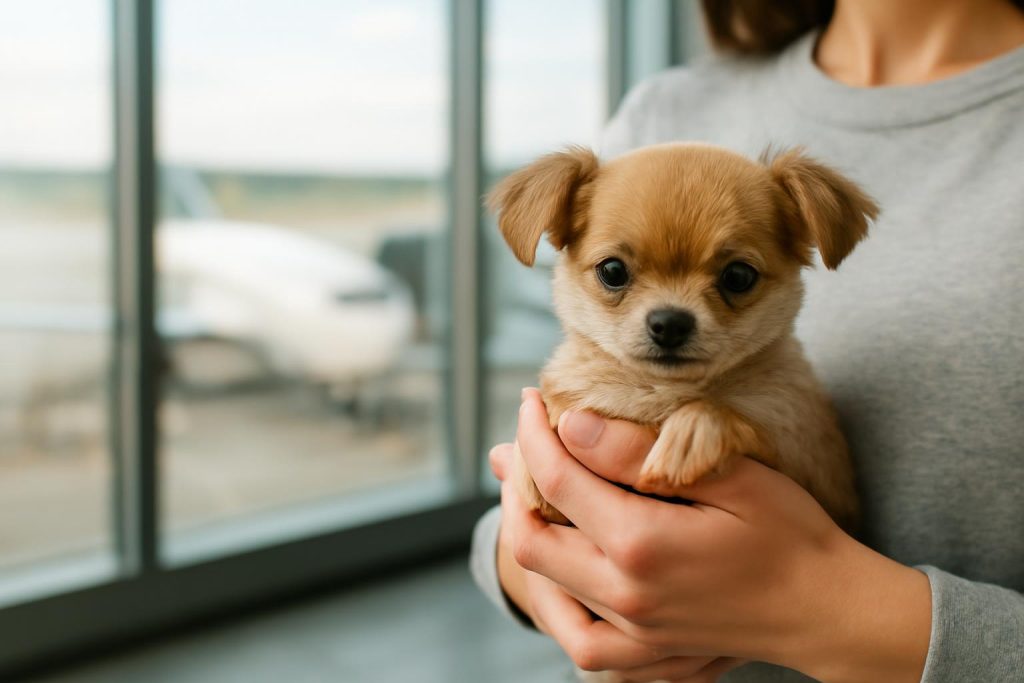
Flying with a teacup puppy can be manageable, but it requires more planning than traveling with a larger, mature dog. Tiny puppies have small bodies, limited energy reserves, and different vaccination and development needs. A crowded airport, long travel day, missed meal, or poorly ventilated carrier can create unnecessary risks.
Airline policies also vary significantly. Some airlines restrict young puppies, limit the number of in-cabin pets, require specific carrier dimensions, or do not accept pets on certain routes. Rules may change, so always confirm the current requirements directly with the airline before booking.
This guide explains how to prepare for air travel with a small puppy in the United States, what to pack, how to choose a carrier, and when flying may not be appropriate.
Is It Safe to Fly With a Teacup Puppy?
For some healthy puppies, traveling in the cabin with a responsible adult can be reasonable. However, “teacup” is not a formal breed classification, and extremely small puppies may be more vulnerable to low blood sugar, chilling, dehydration, stress, and accidental injury. The puppy’s age, weight, health history, breed, temperament, and destination all matter.
Before making travel plans, schedule a veterinary examination. Ask whether your puppy is healthy enough for the proposed trip and whether the veterinarian recommends delaying travel. Very young puppies, underweight puppies, puppies recovering from illness, and dogs showing coughing, vomiting, diarrhea, weakness, or poor appetite should not fly without veterinary guidance.
Air travel may be especially unsuitable when:
- Your puppy is too young to meet the airline’s minimum age requirement.
- The puppy has not had the vaccinations or health documentation required for the destination.
- The trip includes extreme heat, cold, long layovers, or multiple connections.
- Your puppy has breathing problems, heart disease, severe anxiety, or a history of low blood sugar.
- The airline requires the puppy to travel in the cargo hold rather than in the cabin.
For many tiny puppies, in-cabin travel is preferable because you can observe them throughout the journey. Never assume that a puppy can travel in the cabin simply because the dog is small enough. The airline must approve the arrangement and carrier.
Check Airline Rules Before Booking
Airline pet policies can differ in important ways. Review the rules before purchasing a ticket, not after. If you are considering a puppy from Teacup Puppies Official, discuss the expected travel date early so health records, transportation arrangements, and timing can be planned responsibly.
Confirm the airline’s pet requirements
Ask the airline or check its current official policy for:
- Minimum and maximum pet age
- Whether pets are accepted in the cabin on your route
- Approved carrier dimensions and materials
- Pet fees and reservation procedures
- Limits on the number of pets in the cabin
- Restrictions for connecting flights or international travel
- Required health certificates, vaccination records, or identification
- Airport check-in procedures and time requirements
Pet space may be limited, so contact the airline before finalizing your reservation. Ask for confirmation that your puppy is added to the booking and keep the confirmation accessible on travel day.
Review destination requirements
States, territories, and countries may have different entry rules for dogs. Requirements can involve rabies vaccination, age limits, health certificates, parasite treatment, microchip identification, or additional documentation. A puppy that can legally leave one state may not automatically meet the requirements for entering another.
Keep original documents in a waterproof folder and save digital copies on your phone. If a veterinary certificate is required, verify how recently it must be issued and whether a specific form is necessary.
Choose an Airline-Approved Carrier
The carrier is your puppy’s most important piece of travel equipment. It should be secure, well ventilated, escape resistant, and large enough for the puppy to stand, turn around, and lie down comfortably. At the same time, it must fit beneath the seat according to the airline’s rules.
Soft-sided carriers are commonly used for in-cabin travel, but the airline may specify maximum dimensions. Do not rely only on a product description that says “airline approved.” Measure the carrier and compare it with the exact airline requirements.
Before the trip, introduce the carrier gradually:
- Leave it open in a familiar room.
- Place a washable blanket and a safe toy inside.
- Offer treats or meals near the entrance.
- Encourage short, relaxed periods inside.
- Practice carrying the puppy around the home.
- Take brief car rides if the puppy tolerates them.
Never wait until the morning of the flight to introduce the carrier. A puppy that views it as a safe resting place is more likely to remain calm during boarding and takeoff.
Prepare Your Teacup Puppy Before the Flight
A pre-travel veterinary appointment should cover general health, vaccination status, parasite prevention, feeding, and signs that would require postponing the journey. Ask the veterinarian how to handle meals during the travel day, especially if your puppy is prone to low blood sugar or has a very small appetite.
Do not give sedatives or calming medication unless your veterinarian specifically prescribes and explains how to use them. Sedation can affect balance, breathing, temperature regulation, and the ability to respond to stress. Many airlines also have restrictions regarding sedated animals.
Practice the travel routine
Several days or weeks before departure, rehearse the experience in small steps. Practice using the carrier, walking through a busy public area, waiting in line, and hearing unfamiliar sounds. Keep sessions short and positive.
Socialization should never mean overwhelming the puppy. Avoid crowded dog parks, unclean areas, and close contact with unknown dogs when your puppy is not fully protected. A calm practice routine is more useful than exposing a young puppy to excessive stimulation.
What to Pack for a Flight With a Tiny Puppy
Pack a compact travel kit that can be reached quickly rather than buried in checked luggage. Include:
- Airline-approved carrier
- Health and vaccination records
- Leash and secure harness
- Small portions of the puppy’s usual food
- Collapsible water bowl
- Absorbent carrier liners and waste bags
- Unscented wipes and paper towels
- A familiar washable blanket
- One quiet, size-appropriate toy
- Emergency contact information
- Your veterinarian’s phone number
- Any prescribed medication and written instructions
Bring the food your puppy already eats. Travel is not the right time to introduce a new diet, rich treats, table scraps, or unfamiliar supplements. Sudden food changes can cause stomach upset, which is especially inconvenient during a flight.
Feeding and Bathroom Planning on Travel Day
Tiny puppies often need frequent meals, but the ideal timing depends on age, size, breed, health, and your veterinarian’s advice. Do not intentionally withhold food for a long period simply because you are traveling. Likewise, avoid feeding a large meal immediately before boarding if your puppy is prone to motion sickness.
Ask your veterinarian for a travel-day feeding plan. It may involve a normal small meal at an appropriate time, followed by a few familiar bites later, depending on the puppy’s needs. Monitor for weakness, unusual sleepiness, trembling, wobbliness, pale gums, or refusal to eat. These signs warrant immediate attention from an airline employee and veterinary professional.
Offer water in small amounts when appropriate, but do not force drinking. Carrying absorbent liners makes accidents easier to manage. Take the puppy to a designated pet relief area before security if possible, and find out where relief areas are located at connecting airports.
Because airport floors may expose an incompletely vaccinated puppy to germs, ask your veterinarian how to reduce contact with contaminated surfaces. Carrying the puppy in the carrier or using a clean blanket can help, but it does not replace appropriate vaccination and medical advice.
Airport and In-Flight Safety Tips
Arrive early enough to complete check-in without rushing. Stressful last-minute decisions can make it harder to monitor a tiny puppy. Keep the puppy secured in the carrier in busy areas, and use a harness and leash whenever the airline or airport requires removal from the carrier.
Never open the carrier in a crowded terminal or aircraft cabin unless an airline employee directs you to do so. A frightened puppy can escape quickly. Before opening any door, move to a secure, enclosed area and attach the leash.
During the flight:
- Keep the carrier under the seat as required.
- Do not place the carrier in an overhead compartment.
- Keep the puppy away from direct air vents if the cabin feels cold.
- Do not allow strangers to handle the puppy without your consent.
- Monitor breathing, posture, alertness, and comfort.
- Follow all instructions from the flight crew.
Avoid constantly reaching into the carrier. Excessive handling can increase anxiety and may violate airline rules. A familiar blanket and your calm presence are usually more helpful than repeated attempts to comfort the puppy.
After Landing: Helping Your Puppy Adjust
Once you arrive, give your puppy a quiet opportunity to rest, drink, eat according to the planned schedule, and use the bathroom. Keep the first few hours calm. Avoid immediately introducing the puppy to a large group of people, unfamiliar pets, or a busy tourist schedule.
Watch for delayed signs of stress, including vomiting, diarrhea, refusal to eat, persistent panting, weakness, coughing, or unusual lethargy. Contact a veterinarian promptly if symptoms are severe, persistent, or accompanied by collapse, difficulty breathing, pale gums, or inability to stand.
Prepare the destination before you travel. A secure crate or playpen, food and water bowls, familiar bedding, puppy pads, and a temperature-controlled room can make the arrival easier. If you are still organizing your purchase or pickup plans, review the site’s available planning and information pages and contact the team with questions before travel day.
When Driving May Be Better Than Flying
Driving may be the safer and less stressful option when the destination is within a reasonable distance. A private vehicle allows more control over temperature, rest stops, feeding, bathroom breaks, and the puppy’s environment. The puppy should remain secured in a travel crate or crash-tested harness rather than riding loose.
If flying would require cargo travel, extreme weather exposure, multiple connections, or a long and complicated itinerary, reconsider whether the journey should be delayed. Responsible puppy care sometimes means choosing the slower option or waiting until the puppy is older and more resilient.
For families comparing puppies and preparing for pickup, the puppy collection can help you organize your questions and travel timing. Always prioritize the puppy’s health and readiness over a preferred departure date.
Frequently Asked Questions
Can I bring a teacup puppy on a plane?
Possibly. Many airlines permit eligible small dogs in the cabin, but policies vary by airline, route, carrier size, age, and documentation. Confirm the current rules directly with the airline before booking.
What age can a puppy fly?
Airlines commonly set minimum age requirements, but the exact age varies. A puppy must also meet destination health and vaccination requirements. Your veterinarian should confirm whether the puppy is medically ready for travel.
Can a teacup puppy fly in the cabin?
A small puppy may be allowed in the cabin if the airline approves the reservation and the puppy remains in an acceptable carrier under the seat. Size alone does not guarantee approval.
Should I sedate my puppy for a flight?
Do not sedate a puppy unless your veterinarian specifically recommends and supervises the medication. Sedation can create breathing and temperature risks and may be restricted by the airline.
How do I prevent low blood sugar during travel?
Follow an individualized feeding plan from your veterinarian. Bring the puppy’s usual food, avoid long unplanned fasting periods, and learn the warning signs of weakness, trembling, wobbliness, and unusual sleepiness. Seek veterinary help immediately if concerning symptoms appear.
Final Travel Checklist
Before flying with a teacup puppy, confirm the airline reservation, carrier dimensions, health documentation, destination rules, veterinary guidance, meal plan, bathroom strategy, and emergency contacts. Prepare the puppy gradually and keep the travel day calm.
The safest trip is one that is planned around the puppy’s age, health, and comfort—not simply the cheapest ticket or most convenient schedule. With careful preparation and flexibility, many families can make small-dog travel safer and more predictable.
