
Blogs
Small Breed Puppies for Adoption
Sep
Small Breed Puppies for Adoption: How to Choose the Right Puppy for Your Family
Finding the right puppy for your family can be an exciting experience. When you search for small breed puppies for adoption, you will find many breeds, personalities, sizes, and coat types. Each puppy has different needs, and every family has a different lifestyle.
Choosing a puppy should involve more than finding the cutest face. You should consider your family’s daily routine, living environment, children, other pets, activity level, grooming expectations, training needs, and long-term commitment.
The right puppy should fit naturally into your household while giving you the ability to provide the care and attention your new companion needs.
Whether you are interested in a Chihuahua, Maltese, Pomeranian, Yorkie, Maltipoo, Morkie, Dachshund, Poodle, or Pomsky, taking time to understand your options can help you make a more informed decision.
Why Choosing the Right Small Breed Puppy Matters
Small dogs can make wonderful companions for many households. Their compact size can work well in different living environments, including apartments, smaller homes, and larger family houses.
However, small size does not mean that every puppy has the same personality or care requirements.
Some small dogs enjoy frequent play and activity, while others may prefer a calmer routine. Some breeds require more grooming than others. Some puppies may naturally be more outgoing, while others may take more time to become comfortable in a new environment.
That is why your goal should not be to find the smallest puppy available.
Instead, focus on finding a puppy whose personality, care requirements, and lifestyle needs match your family.
Start With Your Family’s Lifestyle
Before looking at individual puppies, think about your everyday routine.
Ask yourself how much time your family can dedicate to a puppy each day. Consider your work schedule, children’s schedules, travel plans, exercise habits, and time spent at home.
A puppy needs more than food and a comfortable bed. Your new companion will need attention, training, socialization, exercise, mental stimulation, grooming, and veterinary care.
If your family enjoys an active lifestyle, you may want to consider a puppy that can comfortably participate in your routine.
If your household has a quieter lifestyle, you may prefer a puppy with a personality that fits a calmer environment.
Breed characteristics can provide useful guidance, but individual puppies can still have different personalities.
Consider the Puppy’s Adult Size
One of the most important things to consider when choosing a small breed puppy is expected adult size.
A young puppy may look extremely tiny when you first meet it, but your puppy will continue to grow and develop.
Research the breed and ask about the puppy’s expected adult size. This can help you prepare for its future needs, including food, bedding, crate size, grooming, exercise, and veterinary care.
Families looking for small companion dogs may consider breeds such as Chihuahua puppies, Dachshund puppies, Maltese puppies, Maltipoo puppies, Morkie puppies, Pomeranian puppies, Pomsky puppies, Poodle puppies, and Yorkie puppies.
Each breed can have different characteristics, so learn about the individual puppy as well as the breed.
Think About Children in the Home
If you have children, consider how a puppy will fit into your family dynamic.
Young puppies need gentle handling. Children should learn how to interact with a puppy respectfully and safely.
Teach children not to pull a puppy’s ears or tail, disturb the puppy while it eats or sleeps, or handle the puppy roughly.
Adult supervision also matters, especially when young children interact with a small puppy.
Create a quiet space where the puppy can rest when it needs a break. Puppies sleep frequently, and uninterrupted rest supports their development.
A successful relationship between a child and a puppy begins with teaching both sides appropriate boundaries.
Consider Your Other Pets
If you already have a dog or cat, think about how your existing pets may respond to a new puppy.
A new puppy can change the household routine. Give your current pets time to adjust while helping the puppy become comfortable in its new environment.
Introduce them gradually and supervise their interactions.
Do not expect every pet to become comfortable immediately. Some animals need more time than others.
Your goal should be to create a calm environment where each animal has its own space and receives appropriate attention.
Match the Puppy to Your Home
Your living environment can also influence your decision.
Small breed puppies can live in different types of homes, but they still need enough space to move, play, explore, and rest safely.
If you live in an apartment, consider your building’s pet policies, noise expectations, nearby walking areas, and access to safe outdoor spaces.
If you live in a house, puppy-proof the areas where your new companion will spend time.
Remove hazards such as electrical cords, small objects, toxic substances, and unsecured household items.
Remember that a small dog can still have plenty of energy. Do not assume that a small body means a puppy will require very little exercise or stimulation.
Understand Exercise and Energy Levels
When choosing small breed puppies for adoption, consider more than physical size.
Different breeds and individual puppies can have different energy levels.
Ask about the puppy’s personality. Does the puppy enjoy playing? Does it settle after playtime? Does it explore new surroundings? Does it enjoy interacting with people?
These observations can help you determine whether the puppy fits your household.
Your puppy will need age-appropriate physical activity and mental stimulation. Training, interactive play, short walks when appropriate, and safe exploration can all help keep your puppy engaged.
Consider Grooming Requirements
Grooming should also influence your choice.
Some small dogs have short coats that require relatively simple maintenance. Other breeds have longer or continuously growing coats that need regular brushing and professional grooming.
For example, families considering a Maltese puppy or Yorkie puppy should understand the grooming commitment associated with their coats.
Families interested in a Pomeranian puppy should also prepare for regular coat maintenance.
Grooming does more than keep your puppy looking good. Regular brushing and grooming can help you monitor the coat and skin while helping your puppy become comfortable with handling.
Choose a grooming routine that your household can maintain consistently.
Think About Training Before Bringing Your Puppy Home
Every puppy needs training.
A small dog still needs to learn basic commands, household rules, leash manners, social skills, and appropriate behavior.
House training also requires patience.
Your puppy may have accidents during the learning process. Establish a consistent routine for meals, bathroom breaks, sleep, play, and training.
Use positive reinforcement when your puppy displays desirable behavior.
Do not expect your new puppy to understand every household rule immediately. Give your puppy time to learn.
Consistency is one of the most important parts of successful puppy training.
Pay Attention to Temperament
A puppy’s personality can influence your experience just as much as its breed.
When possible, observe how the puppy behaves around people and its surroundings.
Some puppies may confidently approach new people. Others may take more time to become comfortable.
Some puppies may love constant play, while others may prefer to observe their surroundings before joining in.
There is no single personality that works for every family.
Instead, think about the personality that fits your household.
If your family enjoys frequent interaction and play, consider whether the puppy’s energy and social behavior match that lifestyle.
If your home has a quieter routine, consider a puppy whose personality fits that environment.
Ask About Health and Veterinary Care
Health should remain one of your main considerations when searching for a puppy.
Before bringing a puppy home, ask about its veterinary history and available records.
Depending on the puppy’s age and circumstances, you may want information about:
- Veterinary examinations
- Vaccinations
- Deworming
- Current diet
- Previous health concerns
- Identification or microchip information, when applicable
- Parent health information, when available
- Recommended follow-up veterinary care
Do not judge a puppy’s health based only on appearance.
A puppy that looks energetic and playful still needs routine veterinary care throughout its life.
Your veterinarian can also help you establish an appropriate vaccination, nutrition, parasite prevention, and wellness plan.
Ask Questions Before Choosing a Puppy
A responsible puppy selection process should give you an opportunity to ask questions.
Ask about the puppy’s age, personality, current food, veterinary care, grooming requirements, and daily routine.
You can also ask whether the puppy has interacted with children, adults, or other pets.
If you have specific requirements, explain them clearly.
For example, if you have children, let the breeder or placement provider know. If you already have another dog, mention that as well.
At Teacup Puppies Official, the website explains that its team provides guidance based on a family’s lifestyle, preferences, and needs.
That type of conversation can help families think beyond appearance and focus on compatibility.
Prepare Your Home Before Your Puppy Arrives
Preparation can make the first few days much easier.
Create a comfortable area where your puppy can sleep and relax. Puppy-proof the rooms where your puppy will spend time.
You should also prepare essential supplies before bringing your new companion home.
Consider having:
- Puppy food
- Food and water bowls
- Comfortable bedding
- Collar and identification
- Leash
- Age-appropriate toys
- Crate or safe resting area
- Grooming supplies
- Training supplies
- Pet-safe cleaning products
Preparing ahead of time allows you to focus on helping your puppy settle into its new environment.
Popular Small Breed Puppies Families May Consider
Different families have different preferences. Learning about several breeds can help you determine which type of companion fits your lifestyle.
Chihuahua Puppies
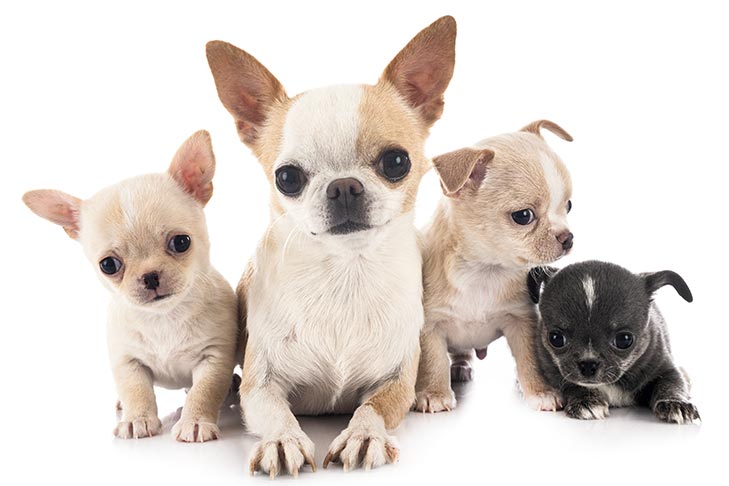
Chihuahua puppies are a popular choice for families looking for a very small companion. Their compact size can appeal to people living in different environments, but they still need proper socialization, training, exercise, and gentle handling.
Maltese Puppies
Maltese puppies are known for their small size and distinctive coat. Families considering a Maltese should understand the grooming and coat-care routine required to keep their companion comfortable and well maintained.
Pomeranian Puppies
Pomeranian puppies have a distinctive fluffy appearance and lively personalities. Families should prepare for regular grooming, training, exercise, and daily interaction.
Yorkie Puppies
Yorkie puppies can make engaging companions for families that understand their grooming and training needs. Their small size does not eliminate the need for exercise, socialization, and mental stimulation.
Maltipoo Puppies
Maltipoo puppies combine Maltese and Poodle ancestry. Individual puppies can differ in appearance, coat, size, and personality, so families should evaluate each puppy individually.
Morkie Puppies
Morkie puppies combine Maltese and Yorkshire Terrier ancestry. Families should consider grooming, training, socialization, and personality before choosing a Morkie.
Dachshund Puppies
Dachshund puppies have a distinctive body shape and personality. Families should learn about their exercise requirements, training, and general care before bringing one home.
Poodle Puppies
Poodle puppies can be intelligent and active companions. Families should consider grooming, exercise, training, and the specific size variety when choosing a Poodle.
Pomsky Puppies
Pomsky puppies can vary in appearance, size, coat, and personality because they combine Pomeranian and Siberian Husky ancestry. Families should ask about the individual puppy and expected adult characteristics before making a decision.
The Right Puppy Is the Right Match for Your Household
There is no single puppy that will suit every family.
The right choice depends on your household, schedule, living environment, experience, and ability to provide consistent care.
Instead of asking, “Which small puppy is the best?” ask:
“Which puppy’s needs fit our family?”
That question changes the way you approach puppy adoption.
It encourages you to look at temperament, health, grooming, exercise, training, and long-term care rather than choosing based solely on appearance.
A Simple Checklist Before Adoption
Before bringing your puppy home, make sure you have considered:
- Your family’s daily schedule
- Your living environment
- The puppy’s expected adult size
- Energy and exercise requirements
- Grooming requirements
- Training needs
- Children in the household
- Existing pets
- Veterinary care
- Nutrition
- Puppy-proofing
- Long-term financial responsibility
- The puppy’s individual personality
- Your family’s long-term commitment
Taking time to consider these areas can help you make a more thoughtful decision.
Final Thoughts
Choosing among small breed puppies for adoption should involve both your heart and careful preparation.
A puppy’s appearance may catch your attention, but its personality, care requirements, health, expected size, energy level, and compatibility with your household should also influence your decision.
Take time to research the breeds you are considering. Ask questions. Learn about the individual puppy. Prepare your home and make sure everyone in the household understands the responsibility involved.
Whether you are interested in a Chihuahua, Maltese, Pomeranian, Yorkie, Maltipoo, Morkie, Dachshund, Poodle, or Pomsky, the most important goal is to find a companion whose needs fit your family.
At Teacup Puppies Official, you can explore available small companion breeds and learn more about puppies before taking the next step.
A thoughtful decision today can help create a stronger foundation for a happy relationship with your new puppy for years to come.
Frequently Asked Questions
What should I consider when choosing a small breed puppy?
Consider the puppy’s expected adult size, temperament, energy level, grooming requirements, health information, training needs, and compatibility with your household.
Are small breed puppies suitable for families with children?
Some small breeds can fit well into family households, but families should consider the individual puppy’s temperament and teach children how to interact safely and gently with a small dog.
Which small breed puppy is right for my lifestyle?
The right puppy depends on your daily routine, activity level, living environment, grooming preferences, and ability to provide training and companionship.
What questions should I ask before adopting a puppy?
Ask about the puppy’s age, health records, vaccinations, deworming, current diet, temperament, socialization, grooming needs, and veterinary recommendations.
How should I prepare my home for a small puppy?
Create a safe sleeping area, remove household hazards, prepare food and water bowls, provide appropriate toys, and establish a consistent routine for feeding, bathroom breaks, sleep, play, and training.
Where can I find small breed puppies?
You can explore the available breeds and individual puppy listings at Teacup Puppies Official, including Chihuahua, Maltese, Maltipoo, Morkie, Pomeranian, Pomsky, Poodle, Yorkie, and Dachshund puppies.
